← Daniel & Kristin's Collection
Roman Imperial — As
Nero As — Temple of Janus
AD 65-66
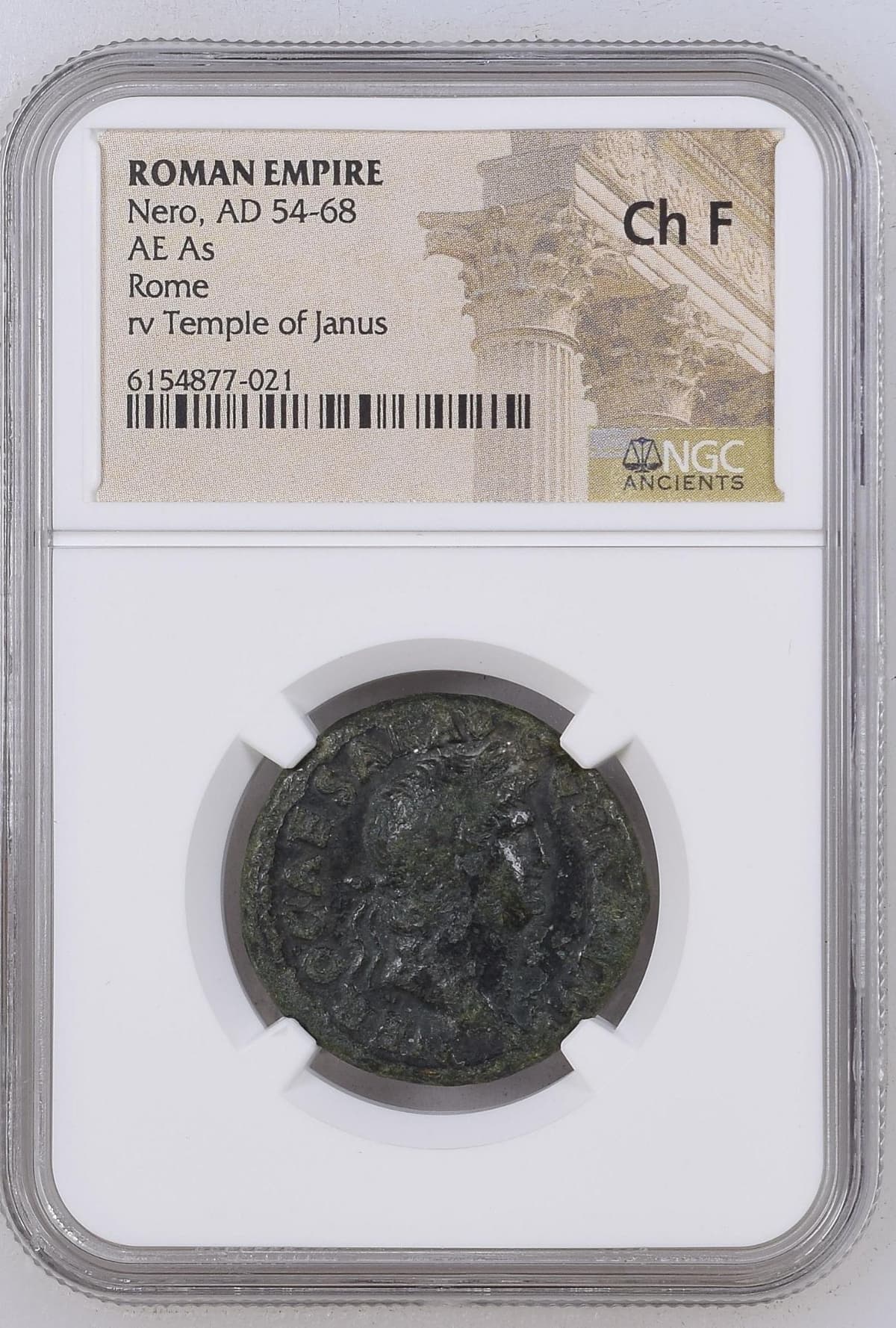
Obverse
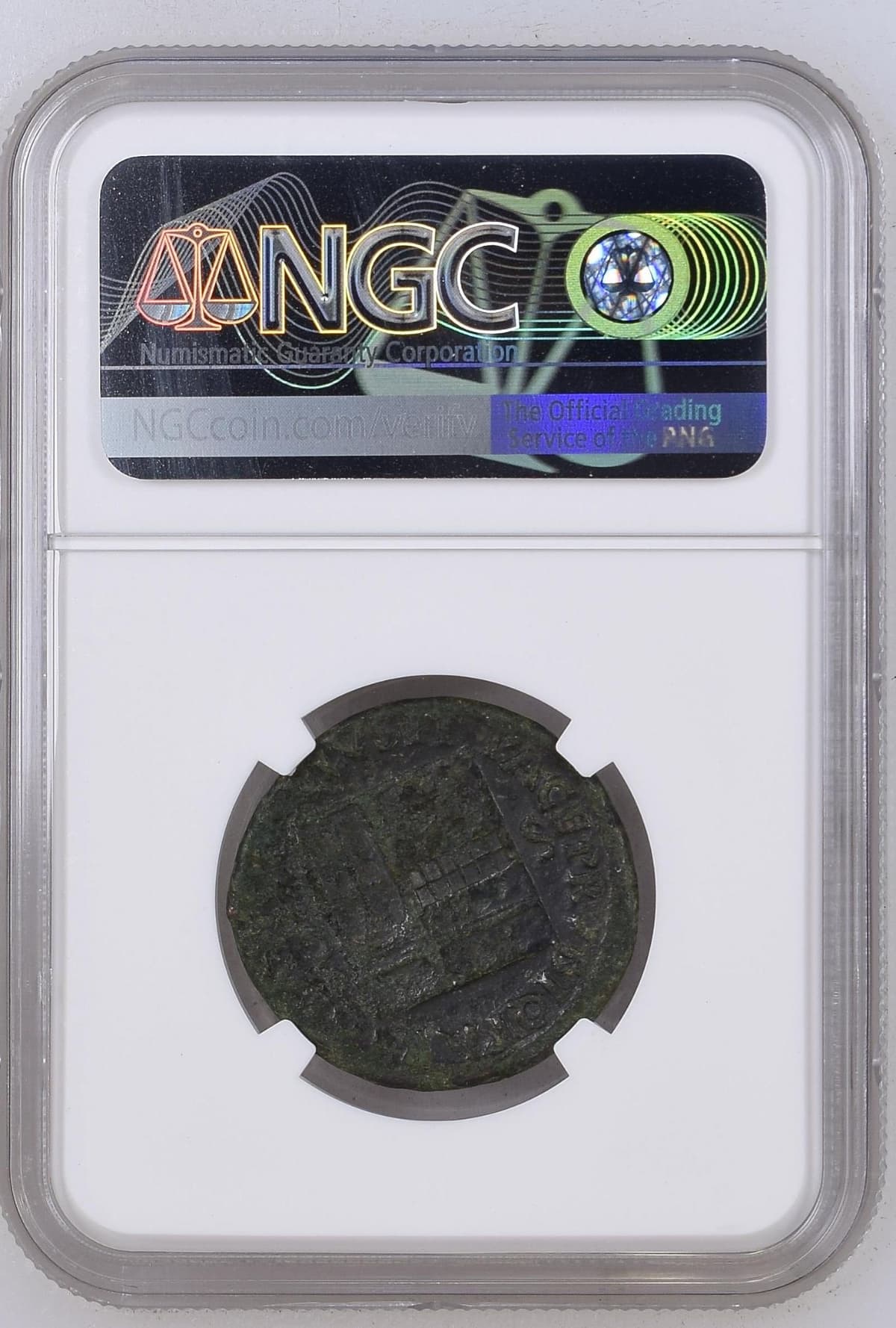
Reverse
The Story
The Temple of Janus in the Roman Forum had doors that stood open whenever Rome was at war — which was almost always. They were closed only during rare periods of complete peace. Before Nero, the doors had been closed only a handful of times: once under the legendary King Numa Pompilius, once after the First Punic War in 235 BC, and on three separate occasions under Augustus. Nero closed them in AD 64-65 following a peace treaty with Parthia. The irony is profound: while Nero celebrated peace, his reign was marked by the Great Fire of Rome, the persecution of Christians, and eventually a military revolt that led to his suicide in AD 68.
Historical Context
Peace with Parthia, aftermath of Great Fire of Rome
- •AD 64 — Great Fire of Rome destroys much of the city
- •AD 64-68 — First organized persecution of Christians
- •AD 65 — Peace treaty with Parthian Empire ends decades of eastern warfare
- •Construction of Nero's Golden House (Domus Aurea) begins
Profoundly ironic coin — celebrating peace while Nero's reign was marked by fire, persecution, and tyranny. The Temple of Janus had been closed only a handful of times in all Roman history.
Symbolism
Obverse
Laureate portrait
The laurel wreath symbolizes victory and imperial authority
Nero wears the same type of wreath awarded to triumphant generals
GERM (Germanicus)
Honorary title inherited from his ancestors
Indicated Nero's connection to the popular general Germanicus, his great-grandfather
Reverse
Temple of Janus with CLOSED doors
Complete peace throughout the Roman Empire
The doors stood open whenever Rome was at war — which was almost always. Closing them was extraordinarily rare.
PACE P R VBIQ PARTA
'The Peace of the Roman People having been established everywhere'
This inscription deliberately echoes Augustus, comparing Nero to Rome's greatest emperor
S C (Senatus Consulto)
'By decree of the Senate'
Standard on bronze coinage, indicating Senatorial involvement in base metal currency
Design
Obverse
Laureate head of Nero facing right (or left)
IMP NERO CAESAR AVG GERM
Reverse
The Temple of Janus with doors CLOSED
PACE P R VBIQ PARTA IANVM CLVSIT / S C
What Could This Buy?
The as was the basic unit of Roman bronze coinage, worth 1/16 of a silver denarius. With one as, you could buy a serving of ordinary table wine at a tavern, a simple snack, or perhaps a bunch of grapes.
Worth Knowing
- ◈The Temple of Janus closing was so rare that this coin type remains one of the most historically significant of Nero's reign
- ◈Nero reportedly sang and played the lyre during the Great Fire — though this story may be propaganda
- ◈The temple depicted no longer exists, making this coin an important archaeological record
Origin
Mint: Rome
Role: Imperial capital and primary mint
The Rome mint under the Empire was directly controlled by the emperor, producing the official coinage that circulated throughout the Roman world.
Office: Imperial mint officials under Nero's authority
Details
MaterialBronze
Weight~10-11g
Diameter27-28mm
PeriodEarly Roman Empire
EraJulio-Claudian Dynasty
ReferenceRIC I 306-347
GradeNGC Ch F (Choice Fine)
Certification6154877-021
StyleJulio-Claudian imperial portraiture