← Daniel & Kristin's Collection
Roman Provincial — AE20 (Provincial Bronze)
Commodus Provincial Bronze — Nemesis
AD 177-192
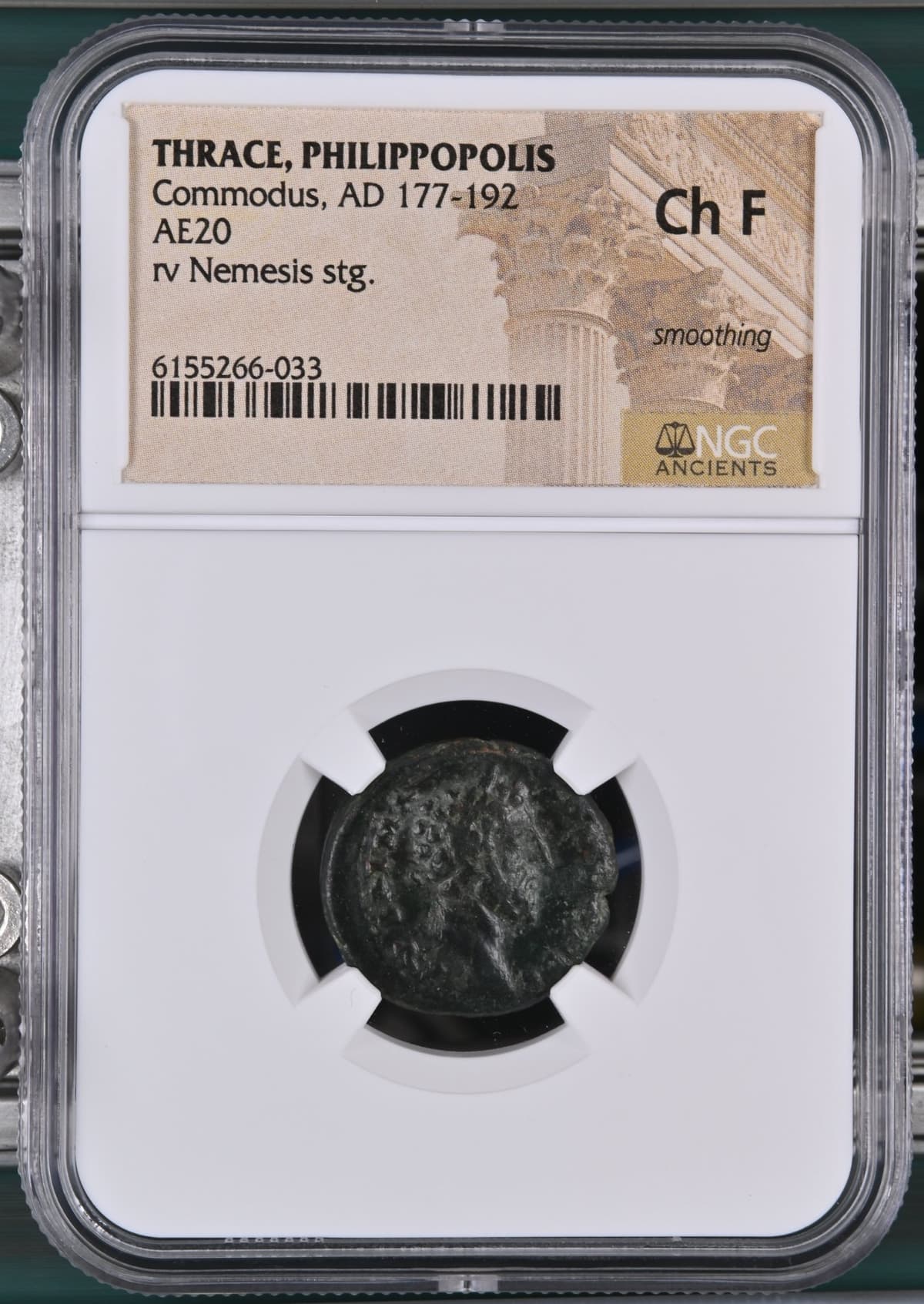
Obverse
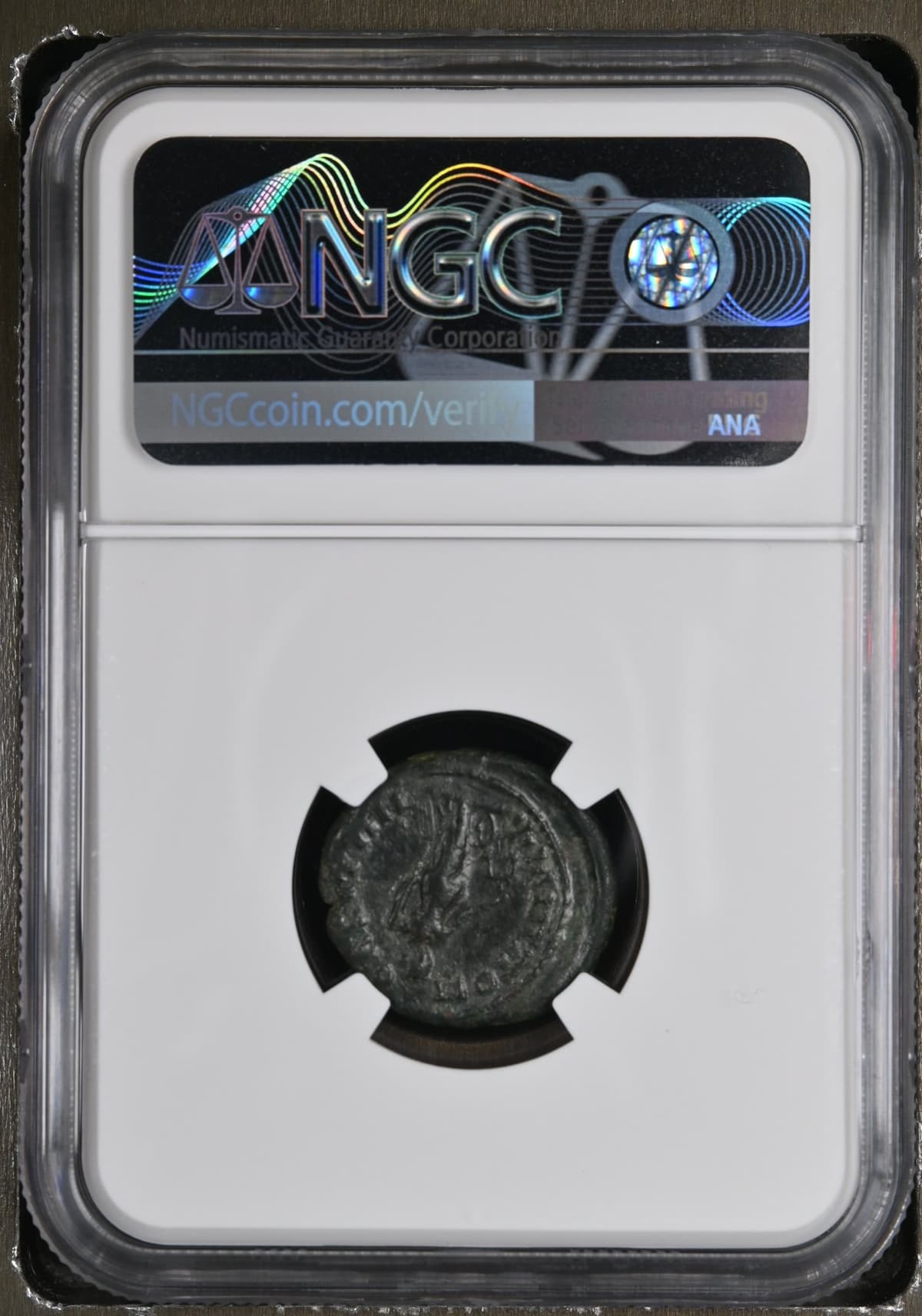
Reverse
The Story
Commodus was the son of the philosopher-emperor Marcus Aurelius, the last of the 'Five Good Emperors.' His reign marks the beginning of Rome's decline. Where his father spent his reign defending the empire against Germanic invasions while writing Stoic philosophy, Commodus was obsessed with gladiatorial combat and increasingly erratic behavior. He became convinced he was the reincarnation of Hercules and fought in the arena as a gladiator — scandals unthinkable for a Roman emperor. He renamed Rome 'Colonia Commodiana' and the months of the year after his own titles. His reign ended on December 31, AD 192, when his inner circle, fearing they were next on his kill list, had him strangled by a wrestler named Narcissus. The Senate then declared Commodus a public enemy (damnatio memoriae), and his name was erased from monuments throughout the empire — though not, fortunately, from coins.
Historical Context
End of the 'Golden Age' of Rome, beginning of decline
- •AD 180 — Death of Marcus Aurelius, Commodus becomes sole emperor
- •AD 180s — Commodus increasingly erratic, fights as gladiator
- •Commodus renames Rome 'Colonia Commodiana' and months after himself
- •AD 192 (Dec 31) — Commodus strangled by wrestler Narcissus
Commodus's reign is traditionally seen as the beginning of Rome's decline. Where his father Marcus Aurelius was the philosopher-king, Commodus was obsessed with gladiatorial combat and spectacle.
Symbolism
Obverse
Laureate portrait of Commodus
Imperial authority
Despite his notorious reign, provincial mints continued producing standard imperial portraits
Reverse
Nemesis
Goddess of divine retribution and balance — she punished hubris and excessive pride
Given how Commodus's story ended (strangled by a wrestler after his inner circle turned on him), the choice of Nemesis seems prophetic
ΦΙΛΙΠΠΟΠΟΛΕΙΤΩΝ
'Of the Philippopolitans'
City ethnic identifying the issuing community
Design
Obverse
Laureate bust of Commodus facing right
Greek legend identifying Emperor and Caesar
Reverse
The goddess Nemesis standing, holding various attributes
ΦΙΛΙΠΠΟΠΟΛΕΙΤΩΝ (of the Philippopolitans)
What Could This Buy?
Provincial bronzes like this served as everyday currency in the eastern provinces, where Greek remained the common language. This denomination was likely used for small daily purchases — a meal, some fruit, or small household items.
Worth Knowing
- ◈The movie 'Gladiator' (2000) was loosely based on Commodus — though the real emperor wasn't killed in the arena
- ◈Nemesis on the reverse seems darkly appropriate given Commodus's violent end
- ◈Philippopolis (Plovdiv) is one of the oldest cities in Europe, still thriving today
Origin
Mint: Philippopolis
Role: Major city in the province of Thrace
An important city located at the crossroads of major trade routes in Thrace. Founded by Philip II of Macedon (Alexander the Great's father) in 342 BC, it flourished under Roman rule as a commercial and administrative center.
Office: Local civic magistrates
Details
MaterialBronze
Weight~4-5g
Diameter20mm
PeriodHigh Roman Empire
EraEnd of Nerva-Antonine Dynasty
ReferenceVarbanov (Philippopolis)
GradeNGC Ch F (Choice Fine)
Certification6155266-033
StyleThracian provincial